
Let’s Get Picky: Guitar Picks, Thickness, Materials, Shape & Tone
A guitar pick is one of the cheapest pieces of gear a player owns, but it directly affects attack, control, string noise, articulation, volume, tone, and feel. Changing picks can make an acoustic guitar sound brighter or warmer, make electric lead lines feel tighter, or make strumming smoother without changing the guitar at all.
This guide explains pick thickness, materials, shape, bevel, grip, and real-world use. It also removes a common myth: there is no single “best pick.” The right pick depends on the player, instrument, string gauge, technique, and tone goal.
Quick Answer: What Matters Most?
- Thickness: Controls flex, attack, volume, and precision.
- Material: Affects grip, stiffness, surface feel, brightness, and wear.
- Shape: Affects how much pick you hold, how precise the tip feels, and how easily the pick moves across the strings.
- Tip and bevel: Affects attack, pick noise, speed, and string release.
- Player control: Pick angle, grip tension, and hand technique matter as much as the pick itself.
GLS Note: Picks are inexpensive. The best approach is not guessing from marketing claims. Buy a small variety pack and test picks on your actual guitar, amp, string gauge, and playing style.
Pick Thickness: Feel, Flex, and Control
Pick thickness is usually measured in millimeters. There is no universal industry standard for the words “light,” “medium,” and “heavy,” but the ranges below are practical real-world categories.
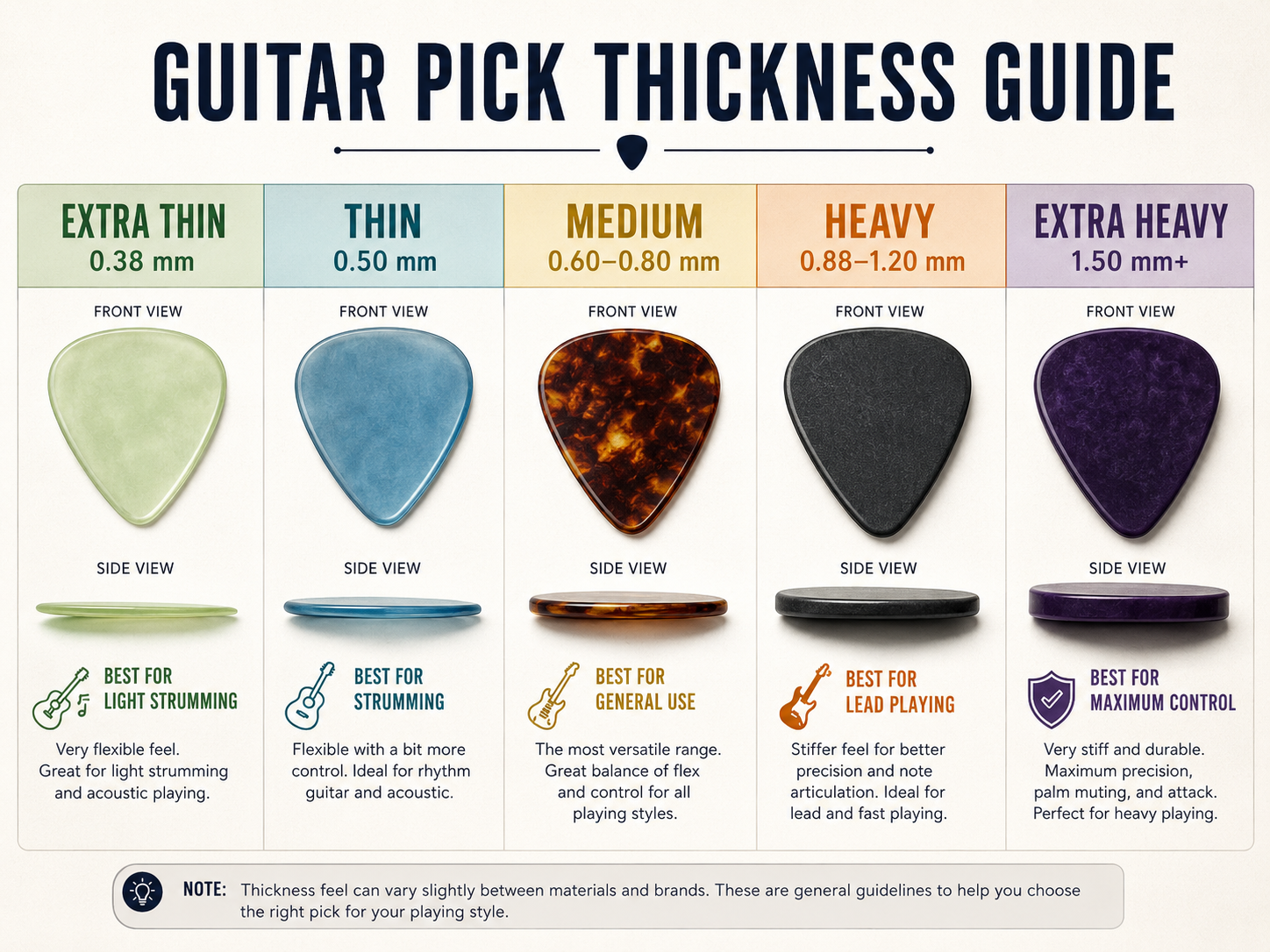
Upload the infographic to
..//Images/blogs/picks/guitar_pick_thickness_guide.png relative to this HTML file, or adjust the image source to match your website folder structure.
| Category | Typical Range | General Feel | Best Use |
|---|---|---|---|
| Thin / Light | ~0.38–0.60 mm | Flexible, bright, forgiving, less precise for fast single-note work. | Acoustic strumming, beginners, light rhythm, softer attack. |
| Medium | ~0.60–0.80 mm | Balanced flex and control. | General use, acoustic/electric rhythm, players who do a little of everything. |
| Heavy | ~0.80–1.20 mm | Less flex, stronger attack, better control. | Electric rhythm, lead guitar, articulate picking, thicker strings. |
| Extra Heavy | ~1.20 mm and up; many extra-heavy picks are 1.50 mm+ | Very little flex, strong control, can feel stiff if grip is tense. | Jazz, metal, fast picking, bass, mandolin, players with controlled touch. |
Important correction: Thin picks are often easier for acoustic strumming, but they are not automatically “louder.” They can create a bright pick sound and a wide strum, while thicker picks often produce stronger fundamental note attack and more control.
Pick Materials: What They Actually Change
Pick material affects stiffness, surface texture, grip, wear, brightness, and how the pick releases from the string. Material choice matters, but the effect is tied to thickness, shape, bevel, and player technique. A thin nylon pick and a thick nylon pick will not behave the same.
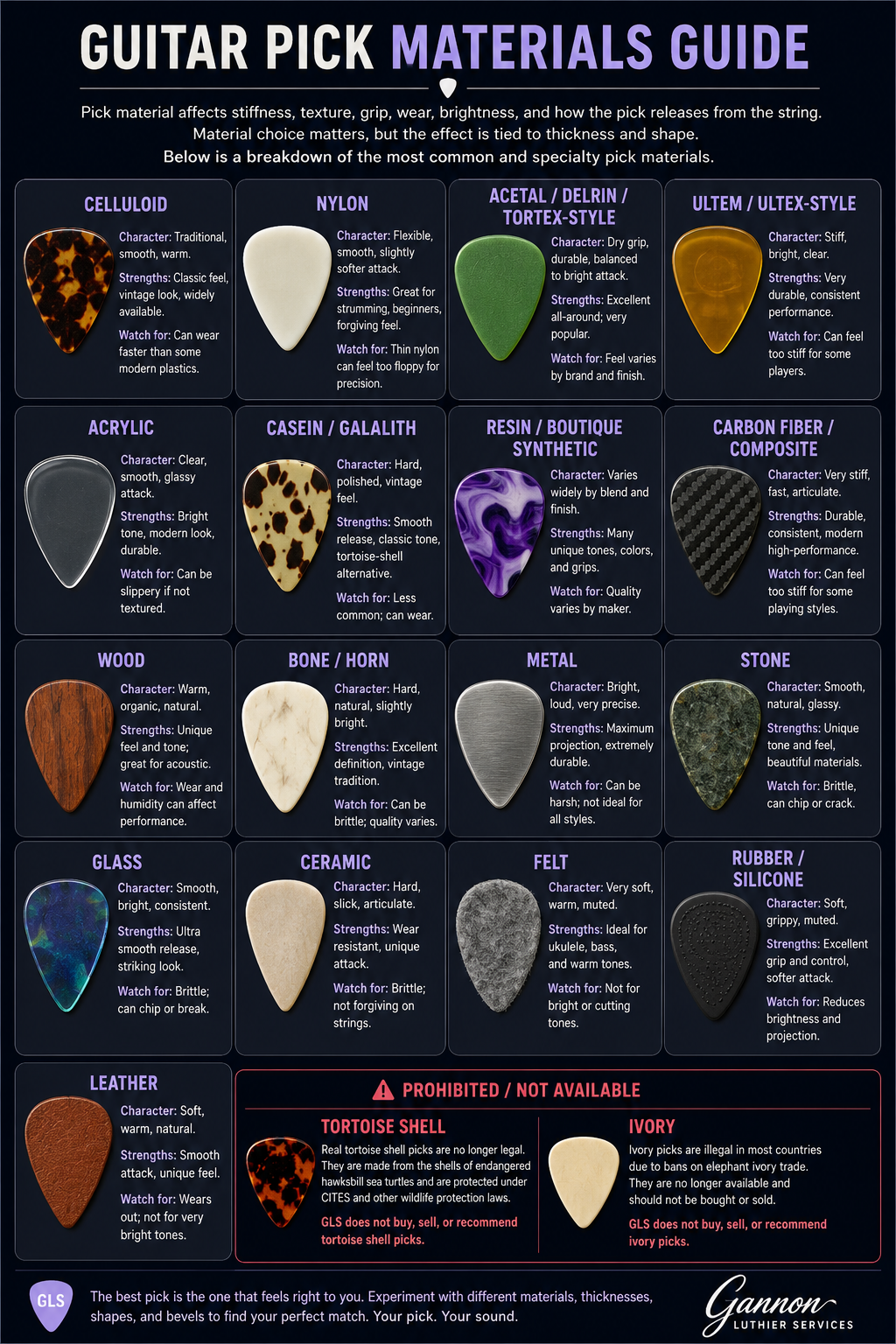
| Material | Practical GLS Notes |
|---|---|
Celluloid 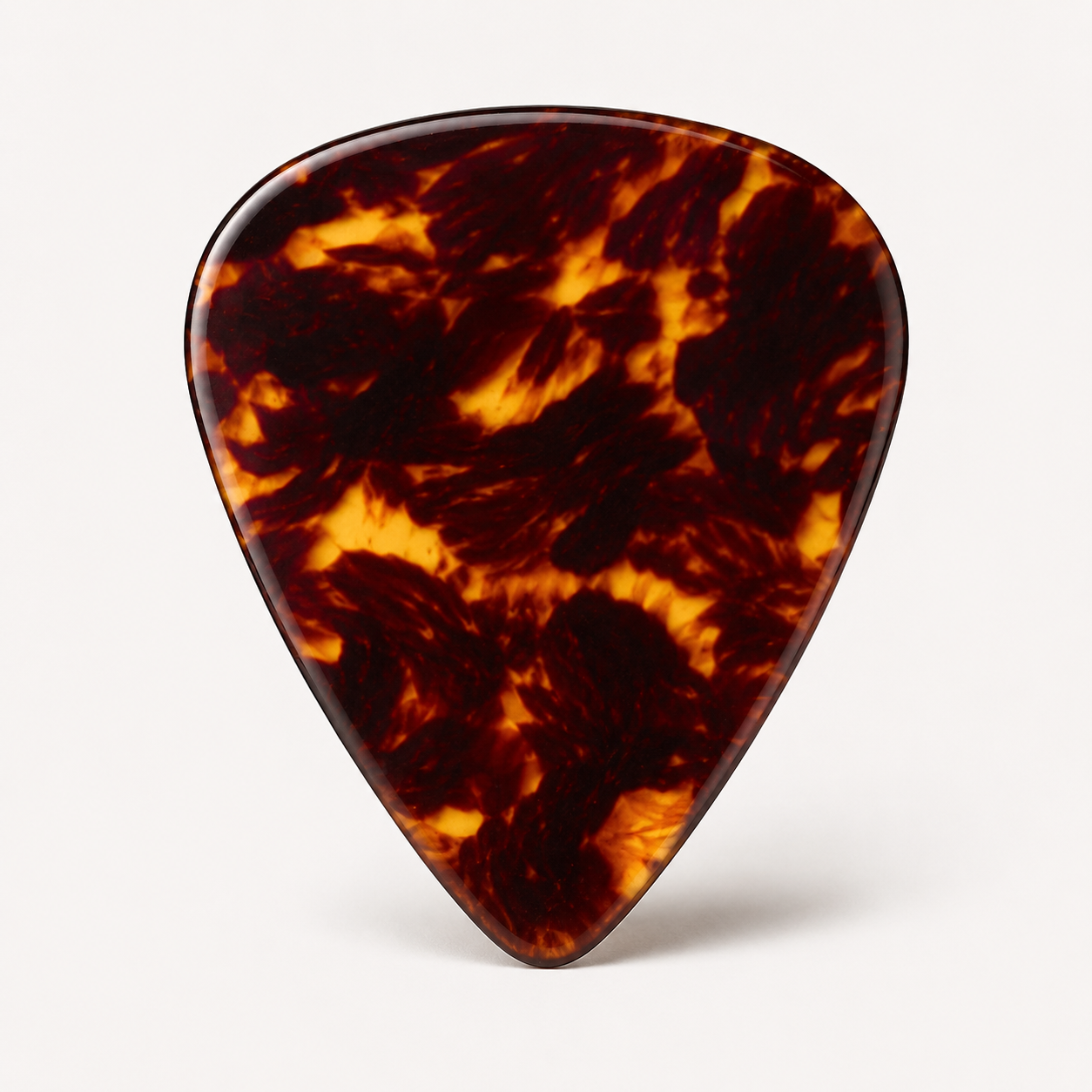 |
Character: Traditional, smooth, familiar, often warm-to-balanced. Strengths: Classic feel, vintage look, common in many gauges. Watch for: Can wear faster than some modern plastics; tortoise-style celluloid is a legal visual substitute, not real tortoiseshell. |
Nylon 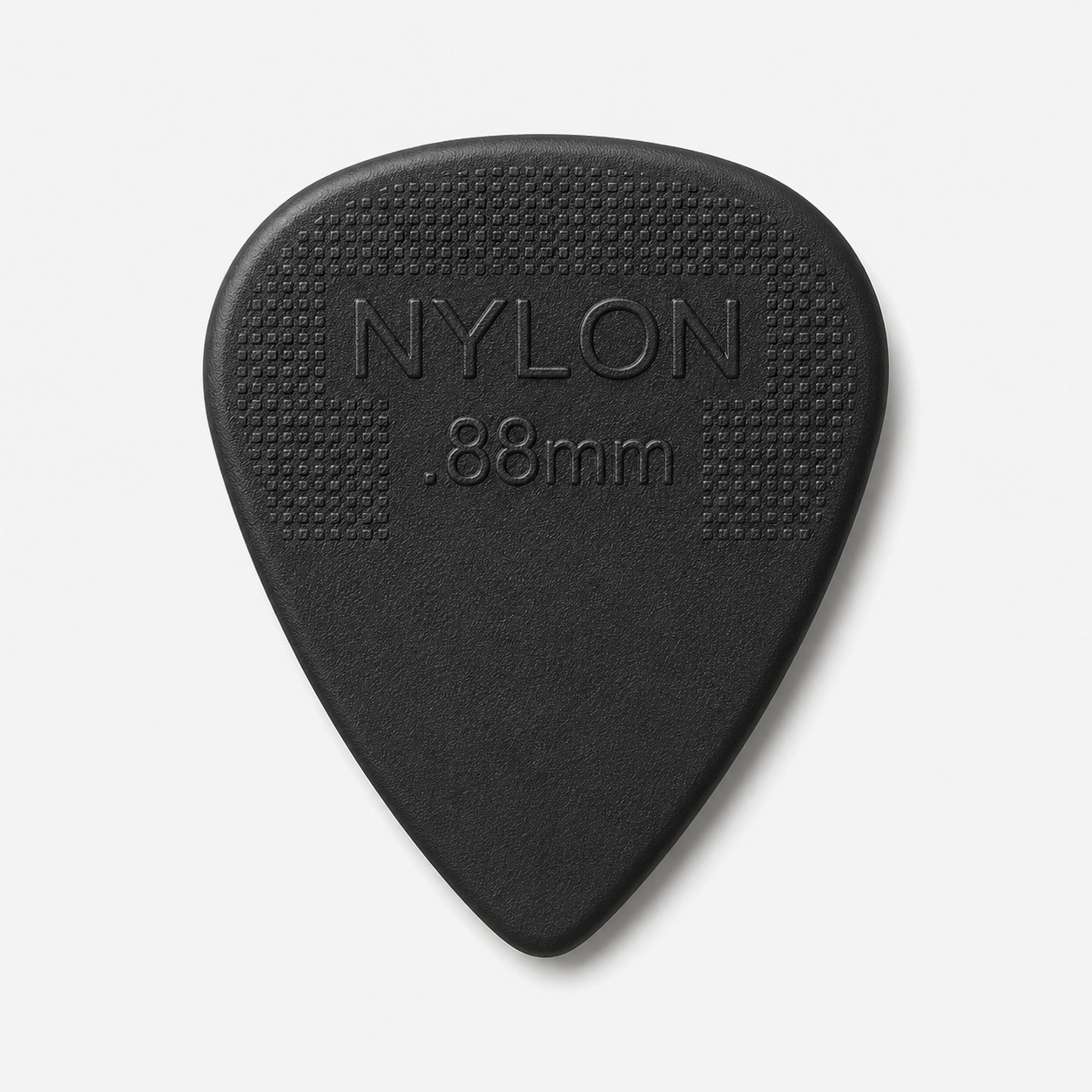 |
Character: Flexible, softer attack, often textured for grip. Strengths: Good for strumming, beginners, and players who like a forgiving feel. Watch for: Thin nylon can feel too floppy for fast single-note precision. |
Acetal / Delrin / Tortex-style 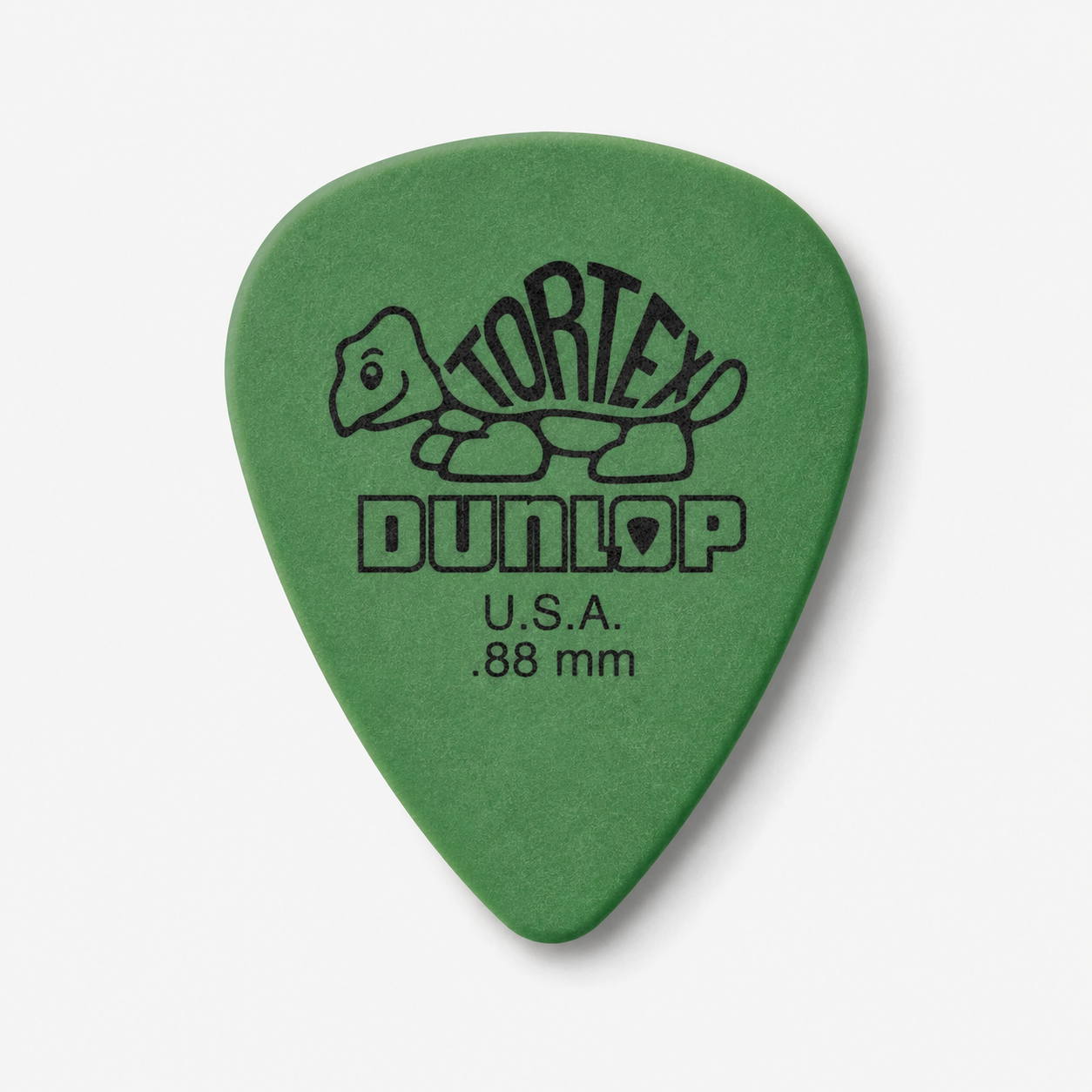 |
Character: Dry grip, durable, balanced-to-bright attack. Strengths: Excellent everyday material; widely used for electric and acoustic players. Watch for: Surface feel varies by brand, finish, wear, and thickness. |
Ultem / Ultex-style 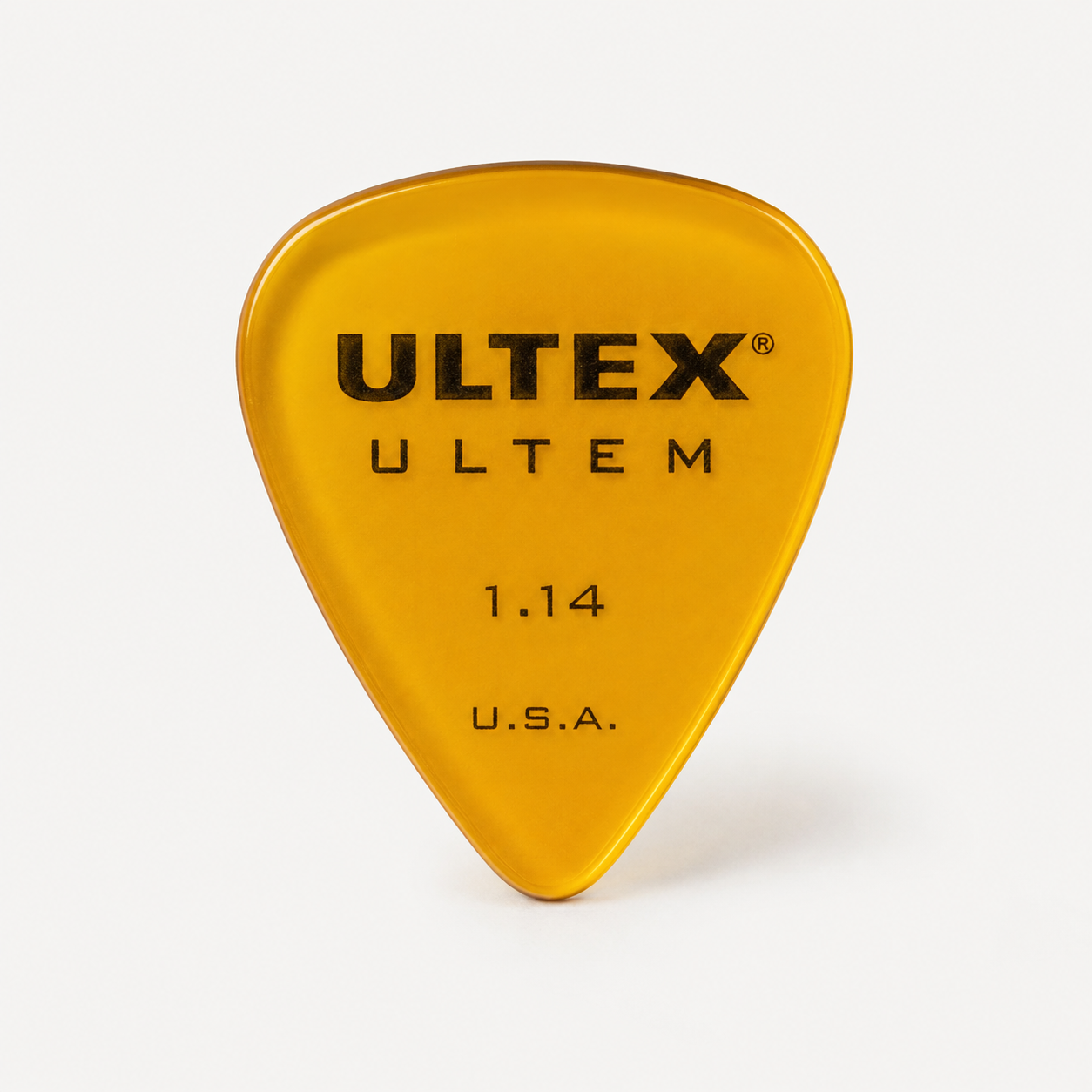 |
Character: Stiff, bright, clear, durable. Strengths: Strong articulation, fast release, good for lead, mandolin, and defined acoustic picking. Watch for: Can sound too bright or sharp for players wanting a softer attack. |
Acrylic 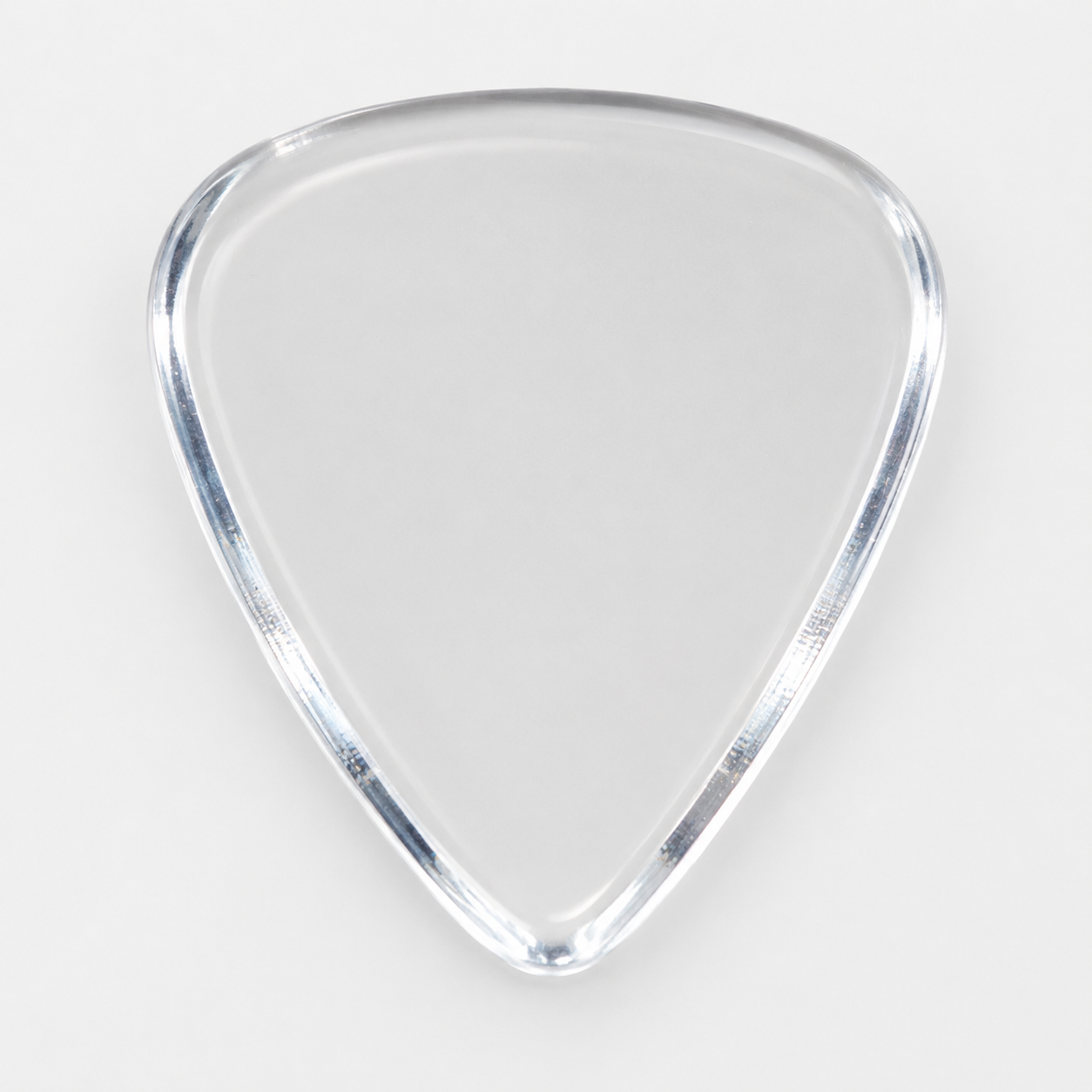 |
Character: Rigid, polished, often bright and smooth. Strengths: Good grip for some players, strong attack, long wear life. Watch for: Can feel bulky or glassy depending on bevel and thickness. |
Casein / Galalith 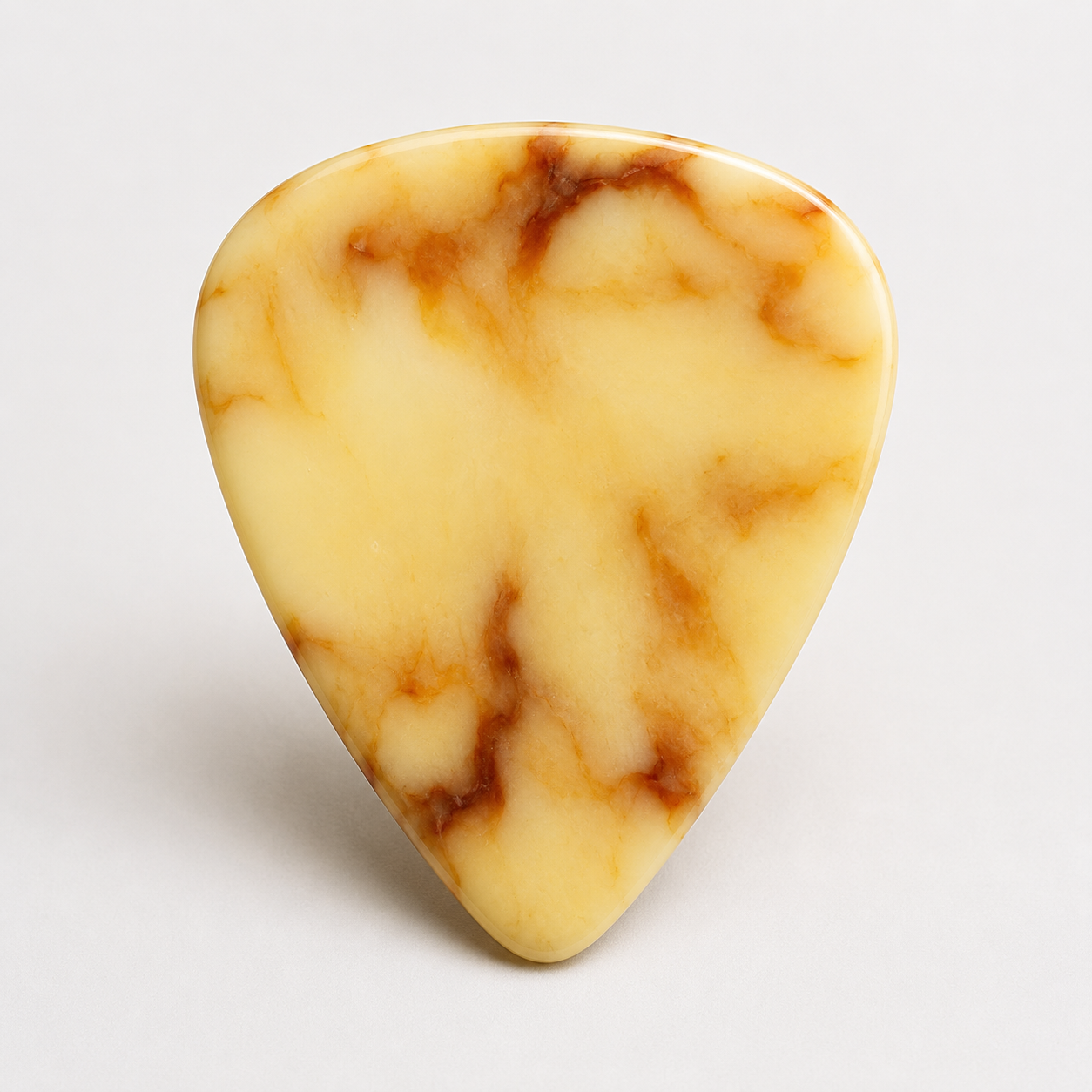 |
Character: Hard, polished, vintage-feeling material often used as a legal tortoiseshell-style alternative. Strengths: Smooth release, strong note definition, and boutique feel. Watch for: Less common, usually more expensive, and can wear or react differently than modern plastics. |
Resin / Boutique synthetic 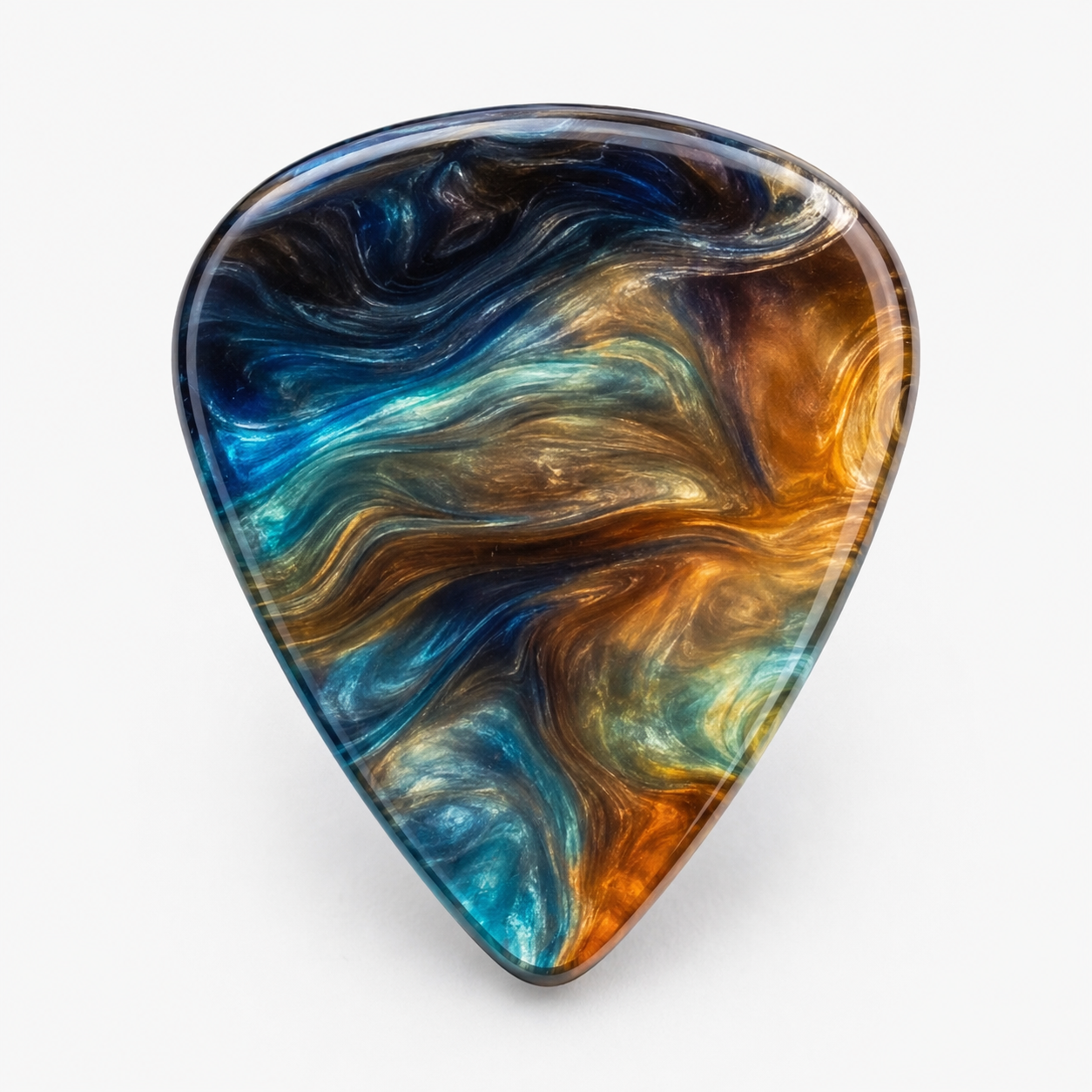 |
Character: Varies widely by maker, resin blend, bevel, and finish. Strengths: Can offer excellent grip, bevel consistency, color options, and specialty feel. Watch for: Do not assume all boutique resin picks sound or feel the same. |
Carbon fiber / composite 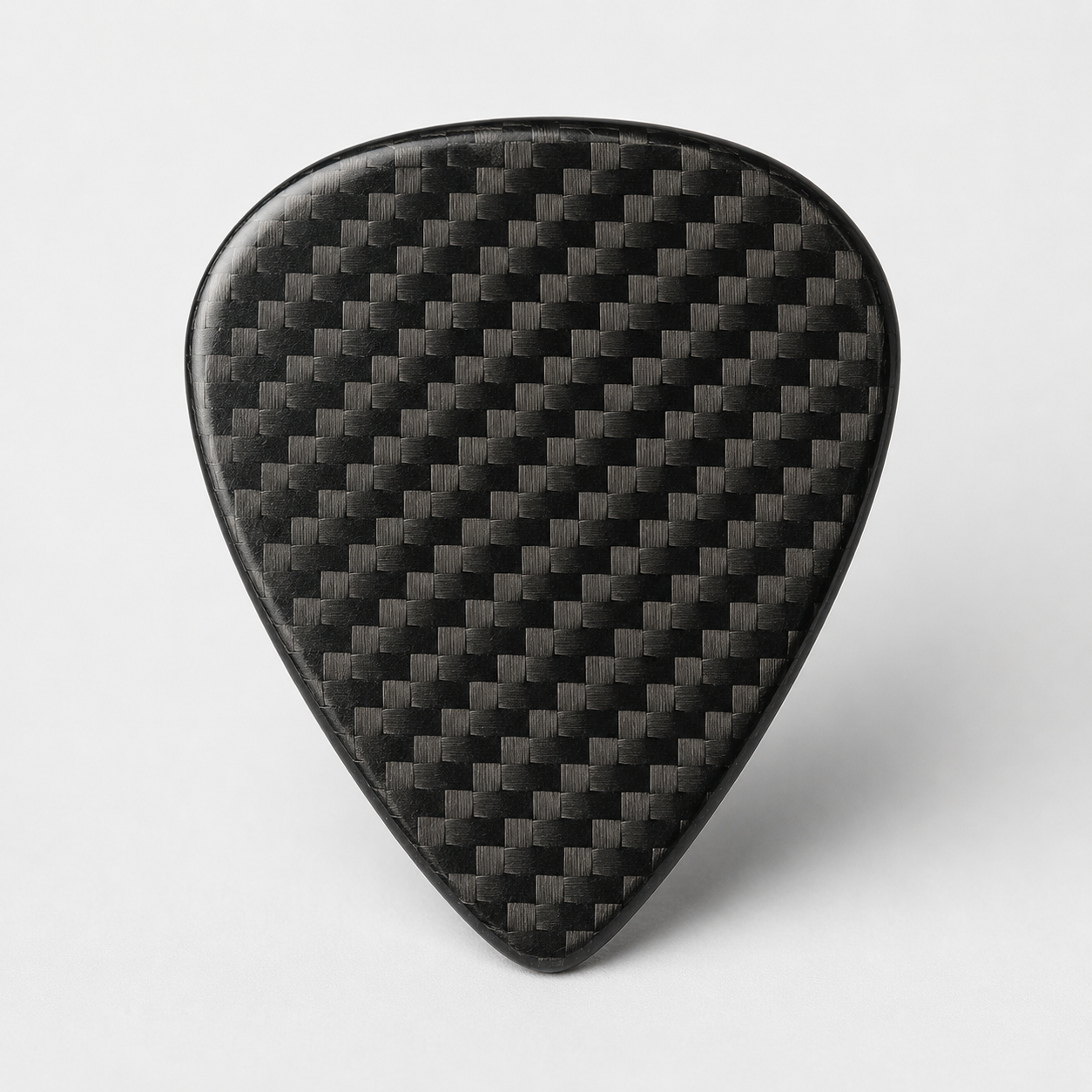 |
Character: Very stiff, modern, articulate, and controlled. Strengths: Durable, consistent, strong attack, useful for precise playing. Watch for: Can feel too rigid or bright for some players and may be less forgiving. |
Wood 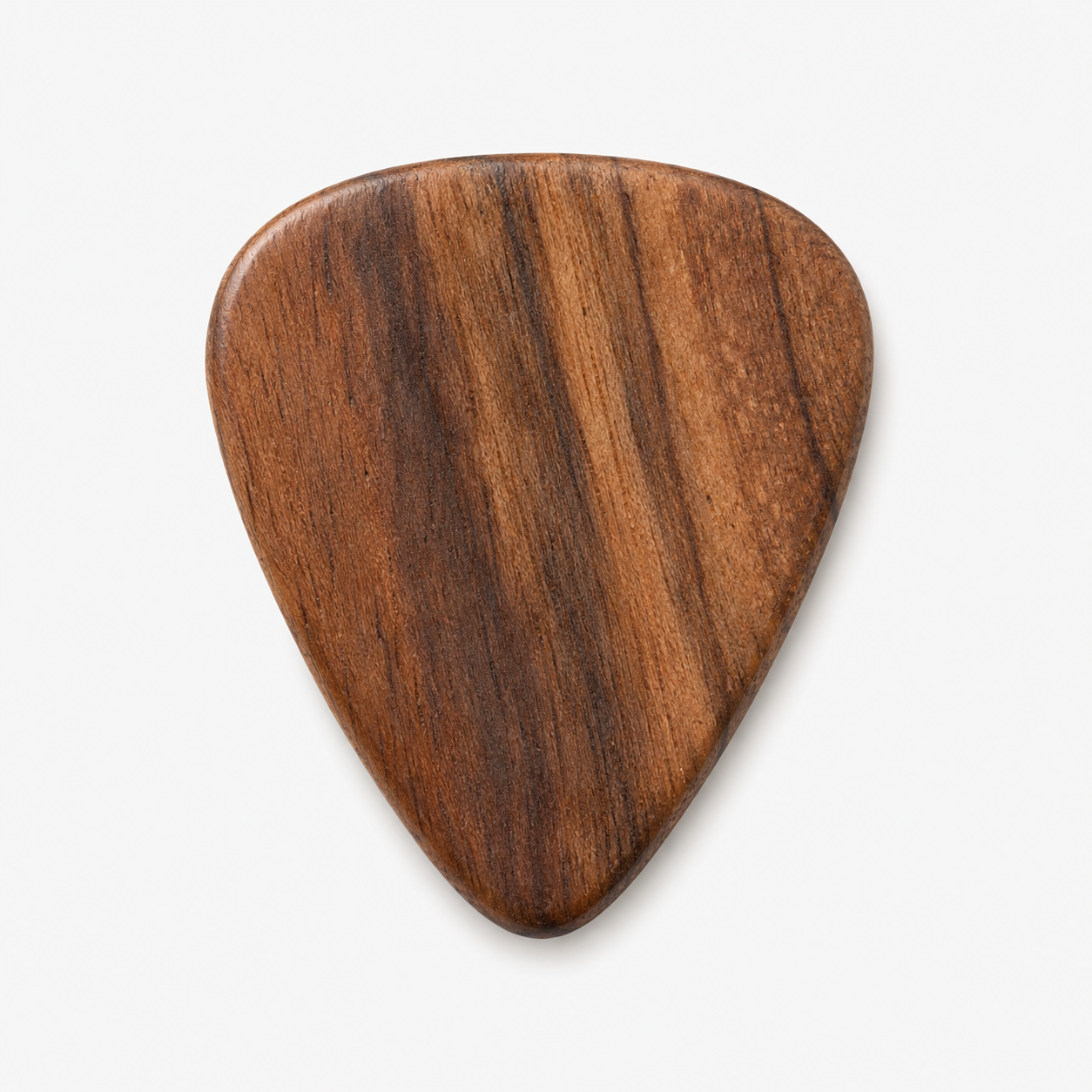 |
Character: Organic, warmer, sometimes softer edge attack. Strengths: Interesting acoustic texture and boutique feel. Watch for: Wears differently, can be less consistent, and humidity can affect performance. |
Bone / Horn 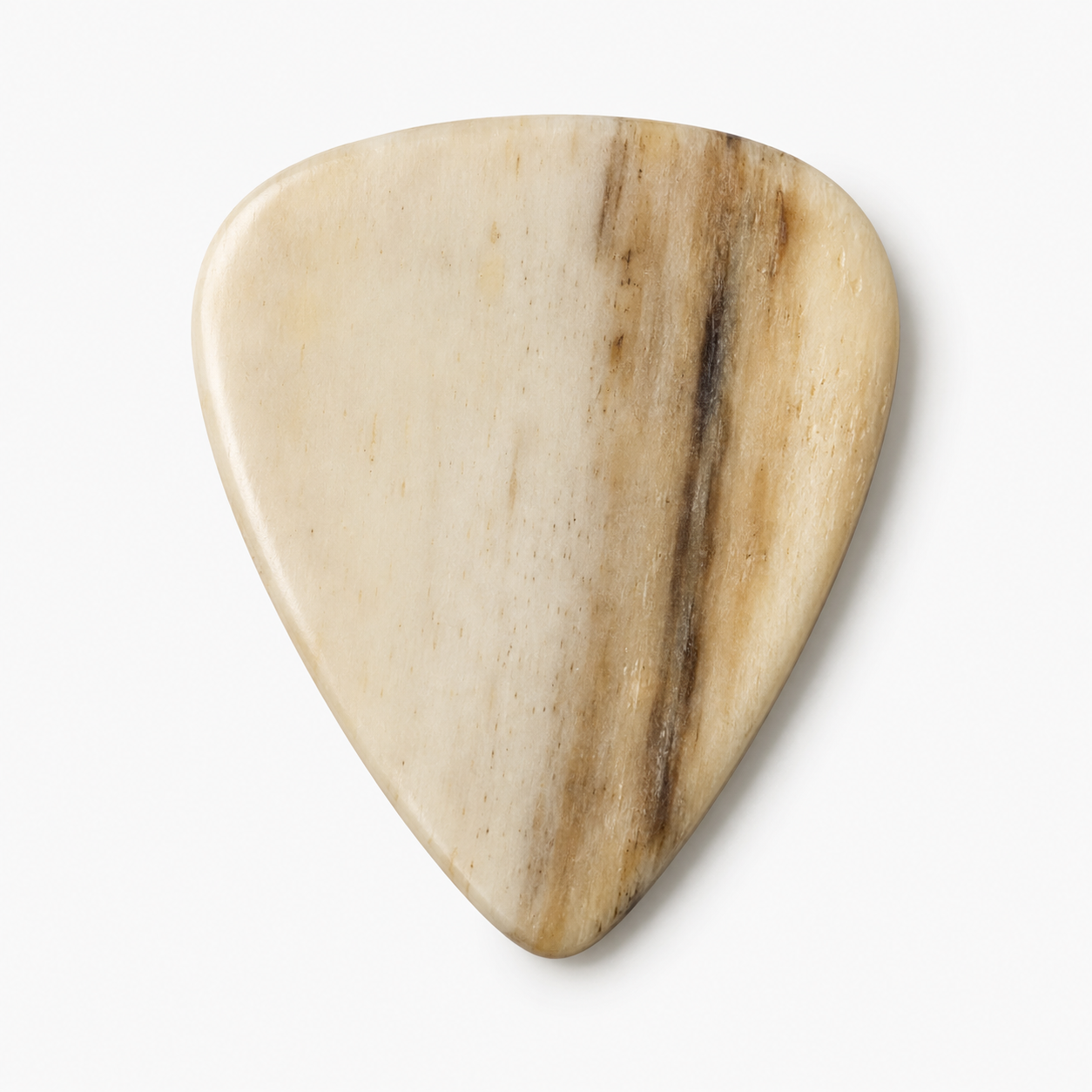 |
Character: Hard, dense, natural, warm-to-clear attack. Strengths: Distinct feel and tone; can be useful for specialty players. Watch for: Natural material variability, ethical/source concerns, brittleness, and higher cost. |
Metal 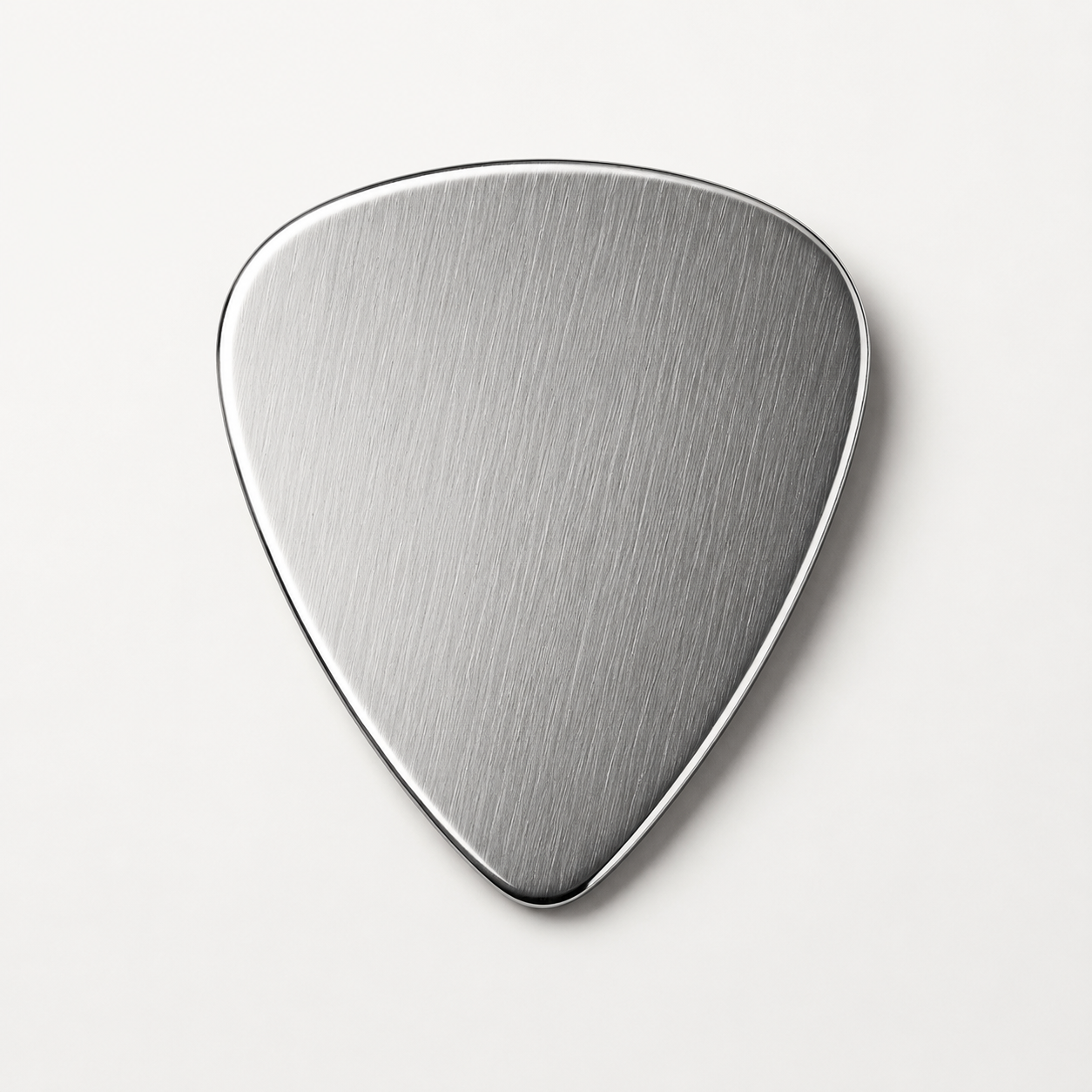 |
Character: Very bright, aggressive, rigid. Strengths: Special effect, strong attack, unusual tone, long wear life. Watch for: Can be harder on strings and produces a metallic edge; not a normal default pick. |
Stone 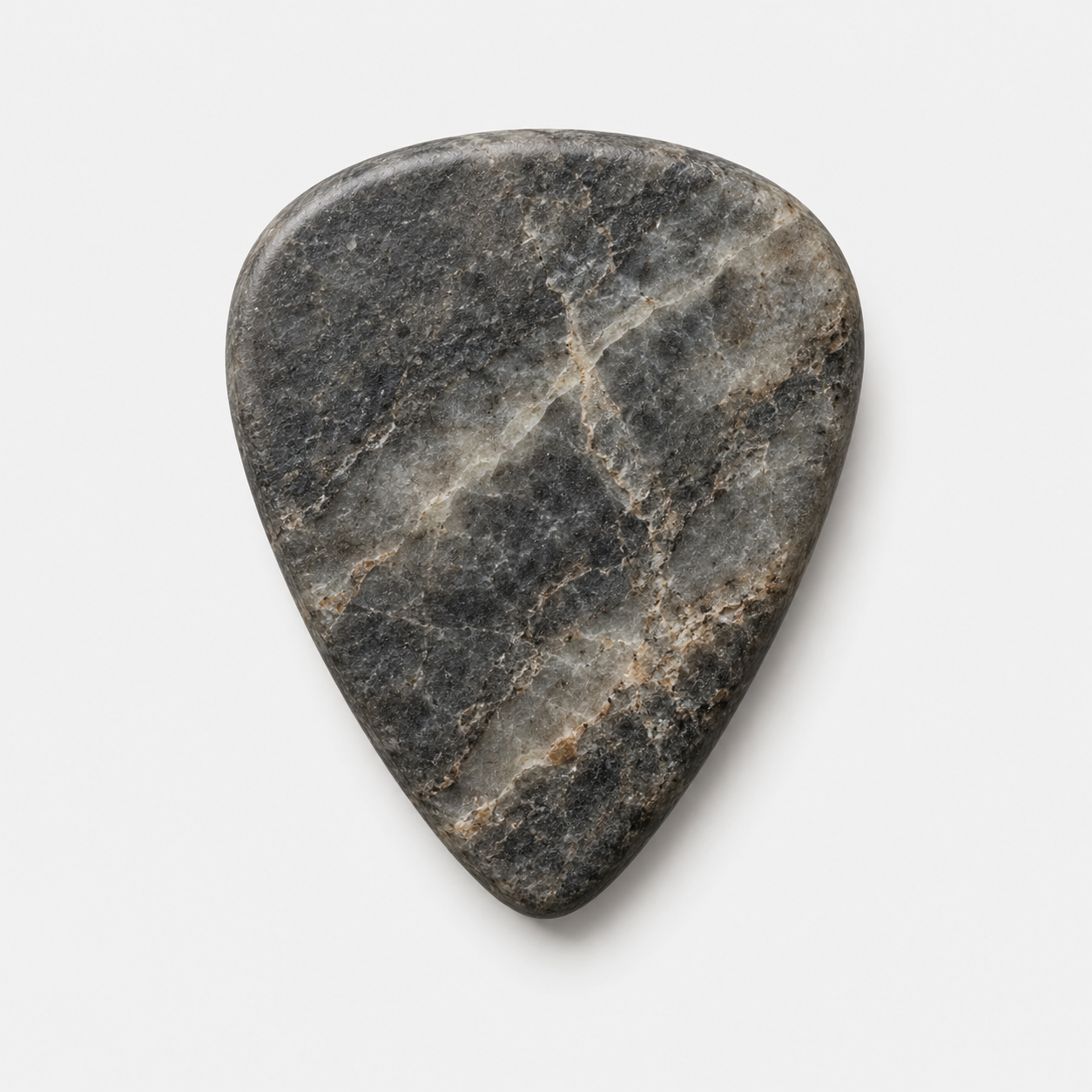 |
Character: Very hard, rigid, smooth, and dense. Strengths: Specialty tone, unique feel, strong attack. Watch for: Can chip or crack; can be unforgiving and expensive. |
Glass 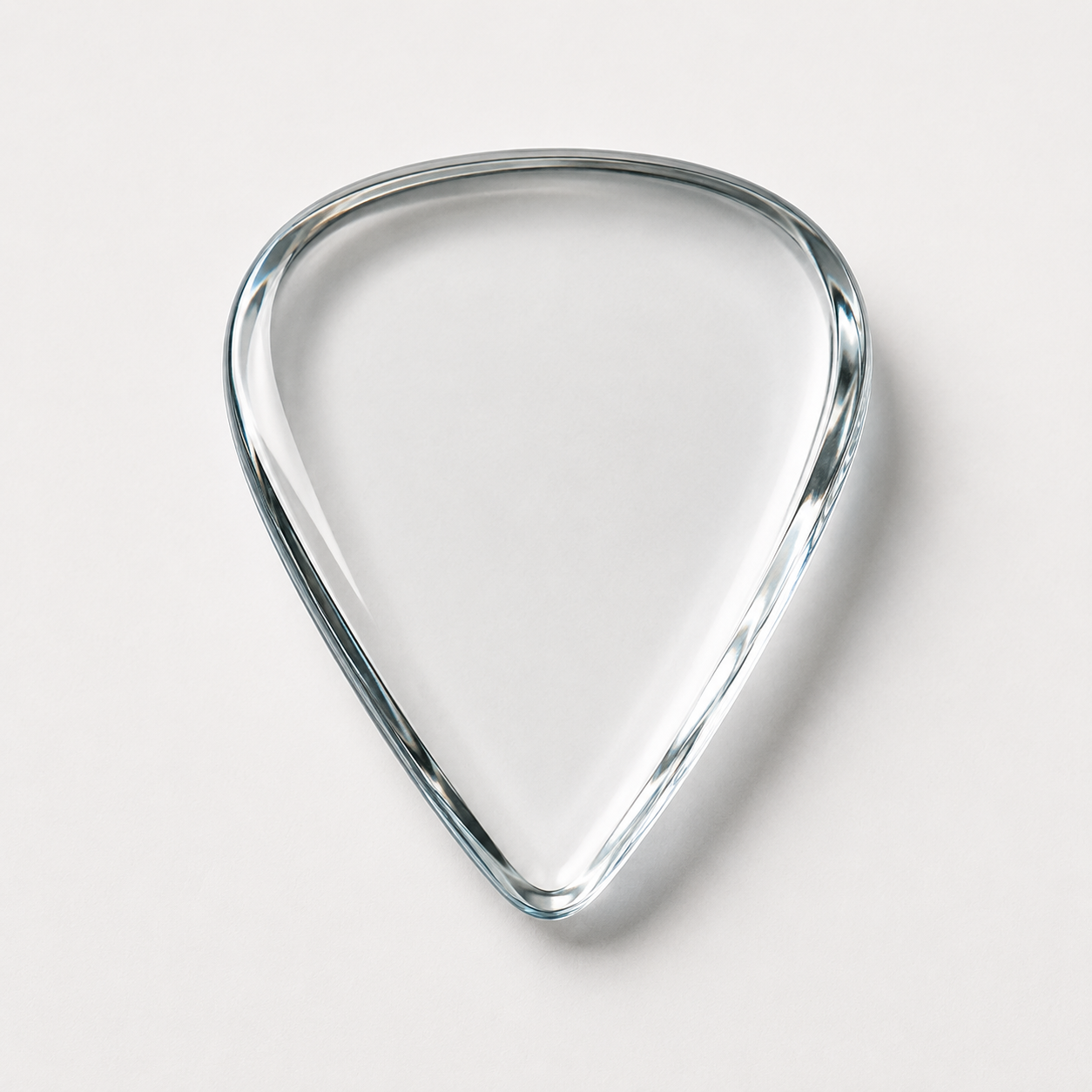 |
Character: Very smooth, bright, hard, and slick. Strengths: Ultra-smooth release and a striking look. Watch for: Brittle, slippery for some players, and not ideal for hard broad strumming. |
Ceramic 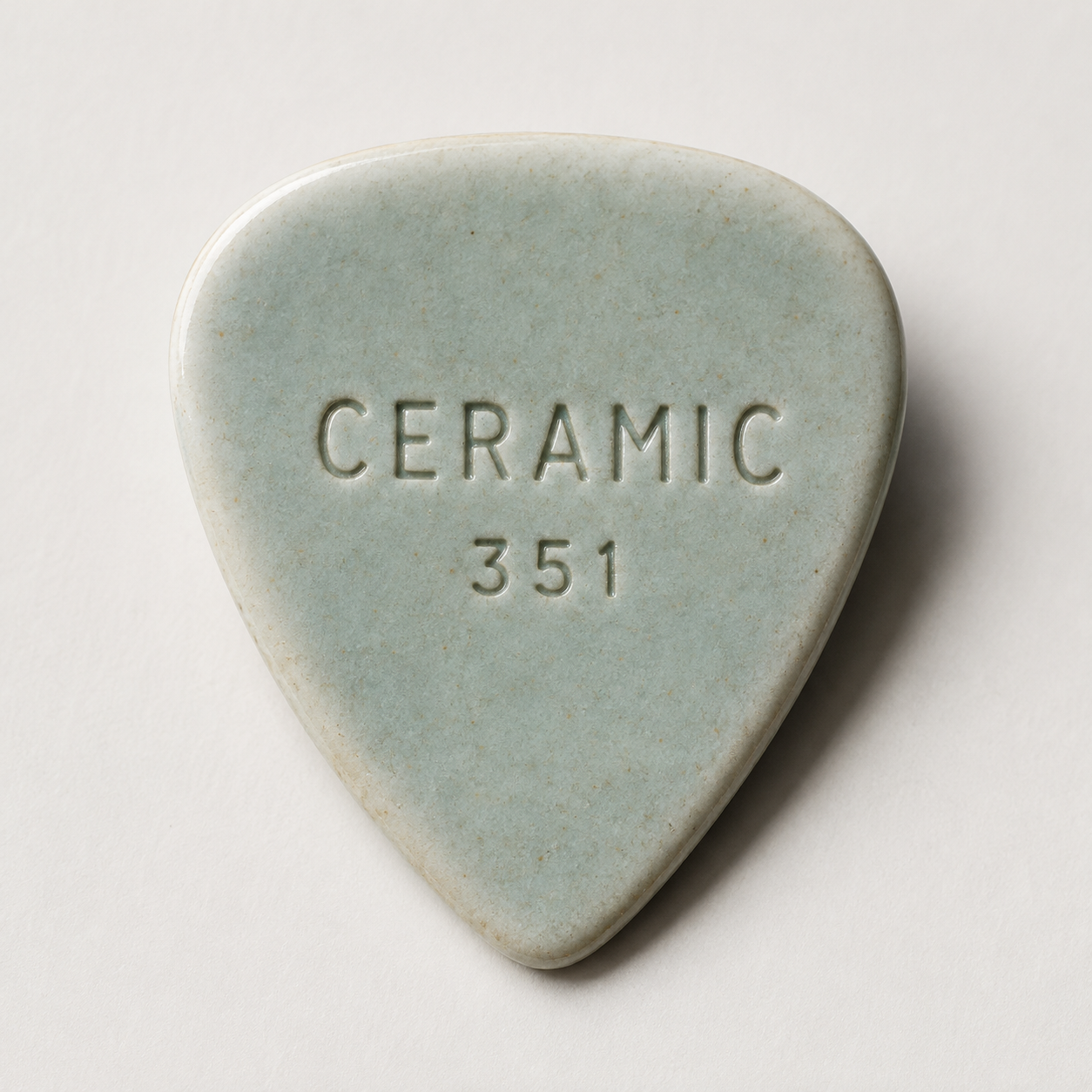 |
Character: Hard, slick, articulate, and very rigid. Strengths: Unique attack and wear resistance. Watch for: Brittle, unforgiving on strings, and a specialty choice rather than a default. |
Felt 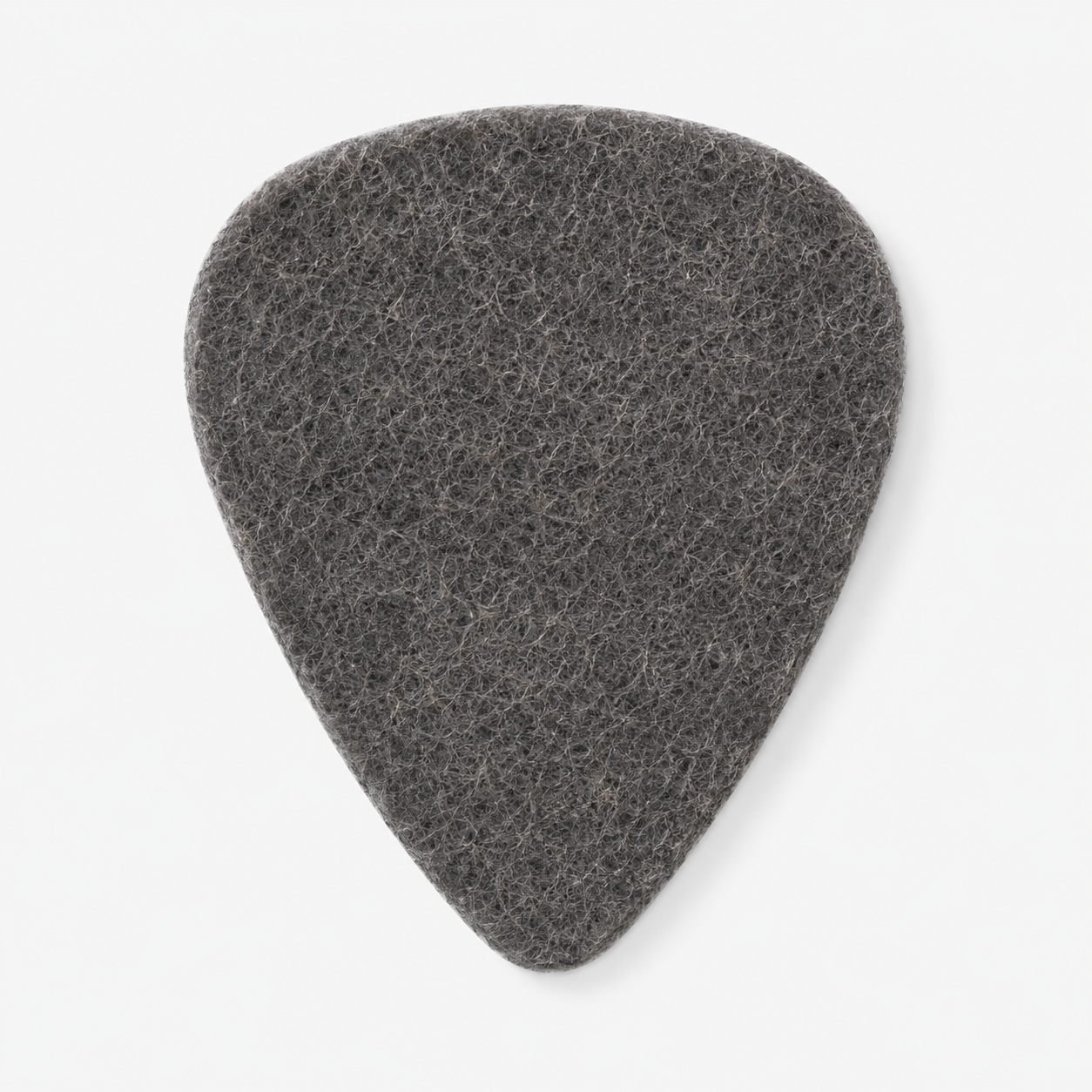 |
Character: Very soft, warm, muted attack. Strengths: Useful for ukulele, bass, and warm strummed textures. Watch for: Not bright or cutting; can wear quickly and feel imprecise for fast guitar work. |
Rubber / Silicone 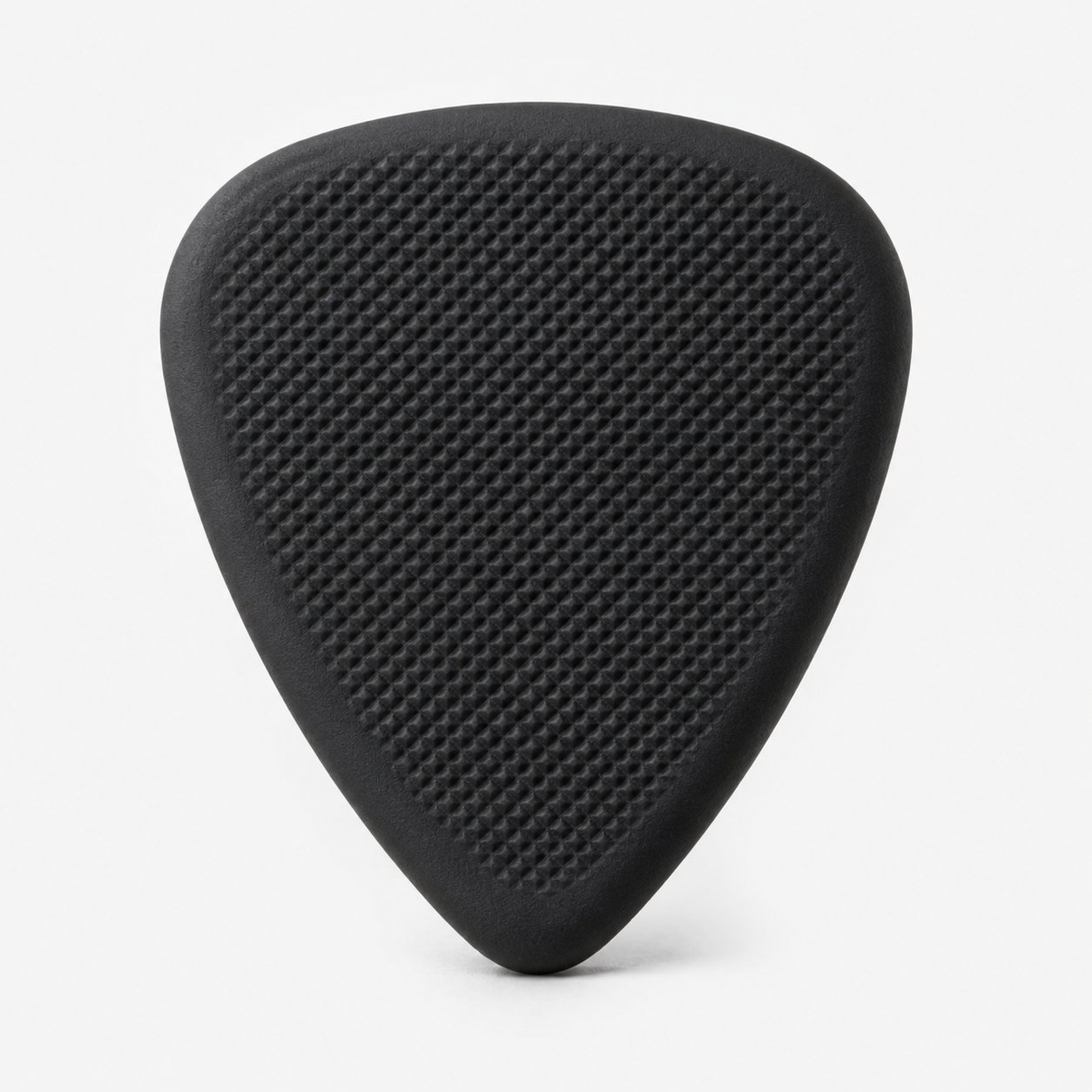 |
Character: Soft, grippy, muted, and low attack. Strengths: Excellent grip and a warmer, less percussive response. Watch for: Reduces brightness and projection; not ideal for crisp lead articulation. |
Leather 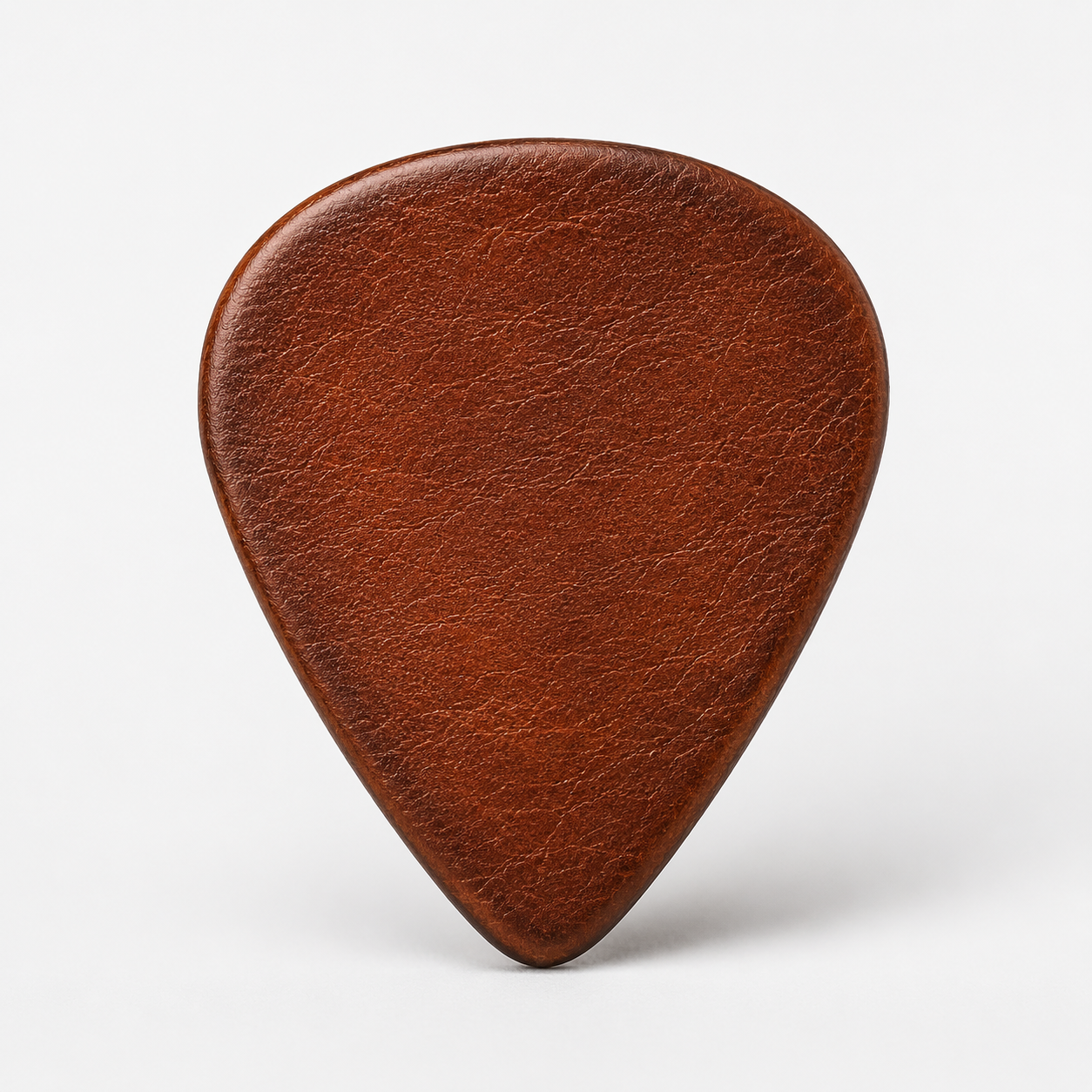 |
Character: Soft, warm, natural, and low-noise. Strengths: Smooth attack and unique feel for niche applications. Watch for: Wears faster, lacks bright attack, and is not a normal all-purpose pick. |
RESTRICTED - DO NOT USE  |
INFORMATION FOR HISTORICAL USE ONLY: These materials are restricted and their use illegal. Do Not Use these materials, even if they are from prior to restriction. |
Ivory 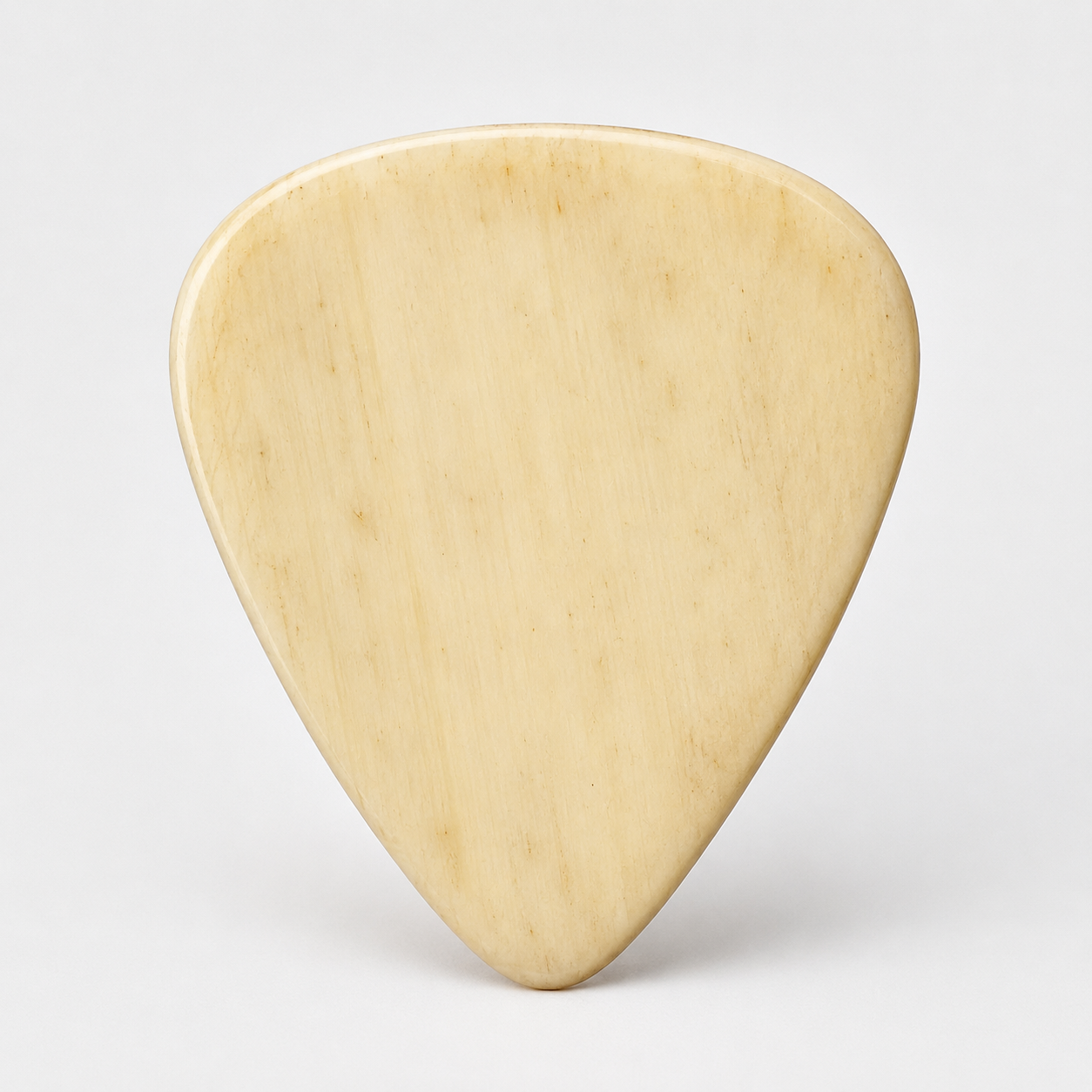 |
Character: Soft, warm, natural, and low-noise. Strengths: Smooth attack and unique feel for niche applications. Watch for: Wears faster, lacks bright attack, and is not a normal all-purpose pick. |
Tortoise Shell 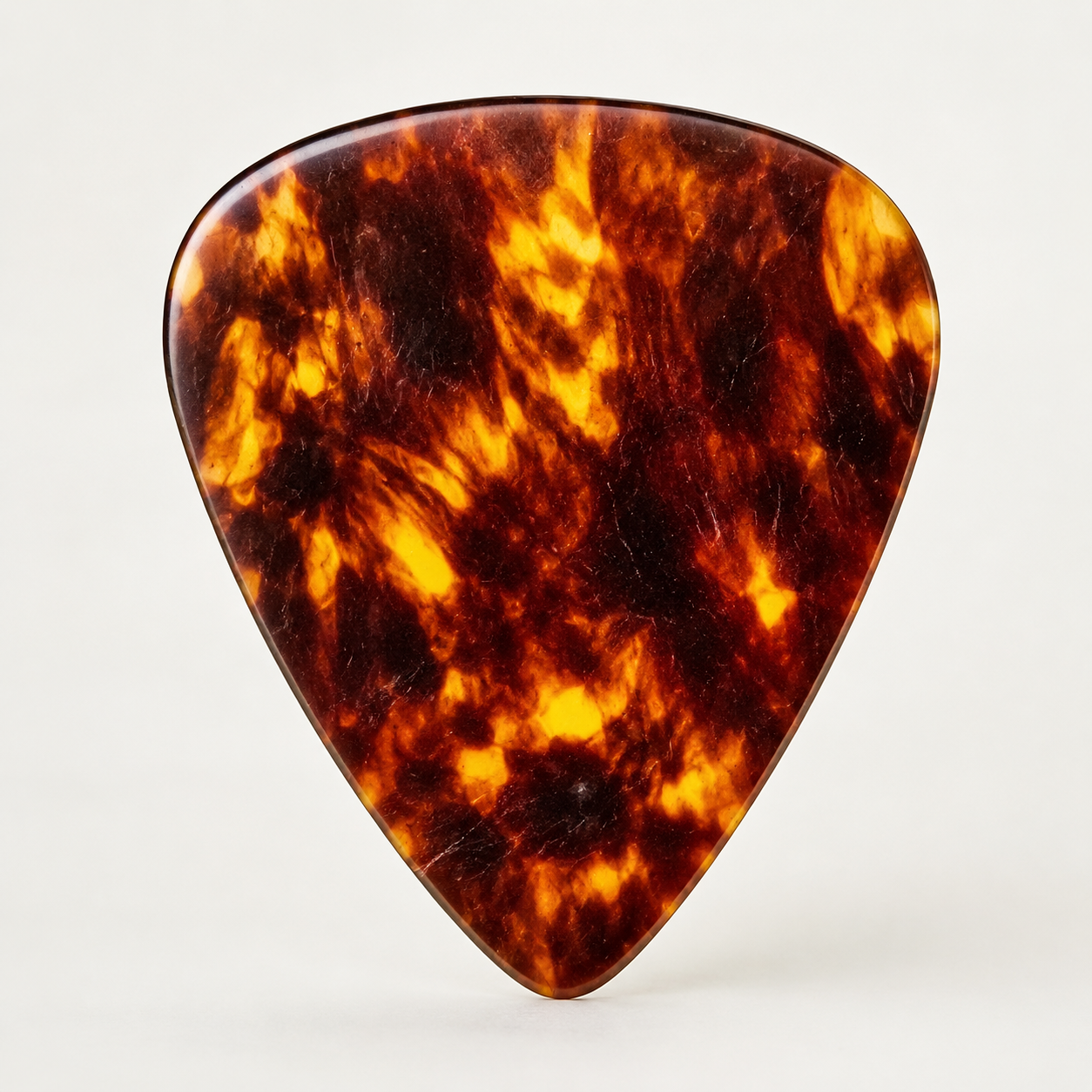 |
Character: Soft, warm, natural, and low-noise. Strengths: Smooth attack and unique feel for niche applications. Watch for: Wears faster, lacks bright attack, and is not a normal all-purpose pick. |
GLS Note: Avoid treating material names as magic. A pick’s thickness, tip shape, bevel, edge polish, and grip pressure can change the result as much as the material.
Tortoiseshell and Ivory: Legal / Ethical Caveat
GLS does not buy, sell, recommend, or promote real tortoiseshell or ivory picks.
Real tortoiseshell picks were historically valued by some players for their feel and string release, but real tortoiseshell comes from endangered hawksbill sea turtles and is heavily restricted or illegal to trade in many circumstances. Modern tortoise-style celluloid, casein / galalith, acetal, and boutique synthetics are the responsible alternatives.
Ivory picks are also a legal and ethical problem. Ivory trade is restricted or illegal in many places, and it is not a practical or responsible modern pick material. Bone and horn are separate natural-material categories, but even those should be evaluated by source, ethics, quality, and player need.
Plain GLS position: do not buy, sell, or recommend real tortoiseshell or ivory picks. Use modern legal alternatives.
Pick Shape: Control, Attack, and Grip
Shape changes how the pick sits in the hand and how the tip hits the string. A player who struggles with accuracy may improve more by changing shape than by changing material.

- Standard 351-style: the normal all-around pick. Good for strumming, rhythm, and general playing.
- Large triangle: more grip area, useful for bass, mandolin, acoustic rhythm, or players who drop smaller picks.
- Jazz / small teardrop: smaller gripping surface and sharper tip. Good for precise single-note work, alternate picking, jazz, fusion, metal, and lead playing.
- Sharp tip: more immediate attack and accuracy, but can sound brighter and expose uneven picking technique.
- Rounded tip: softer attack, less pick noise, smoother strumming, often preferred for warmer rhythm playing.
- Thumb pick: used for fingerstyle, Travis picking, country, bluegrass, and players who want thumb attack while keeping fingers free.
- Shark fin: specialty pick with multiple edges; can provide normal picking, rounded attack, or a textured/raking effect depending on the edge used.
Correction from common misinformation: A rounded pick is not the same as a shark-fin pick, and a sharp pick is not specifically a fingerstyle pick. Thumb picks are the main pick type associated with fingerstyle techniques.
Tip Bevel and Edge Finish
The bevel is the shaped edge of the pick. Two picks with the same thickness can feel very different if one has a sharp square edge and the other has a polished bevel.
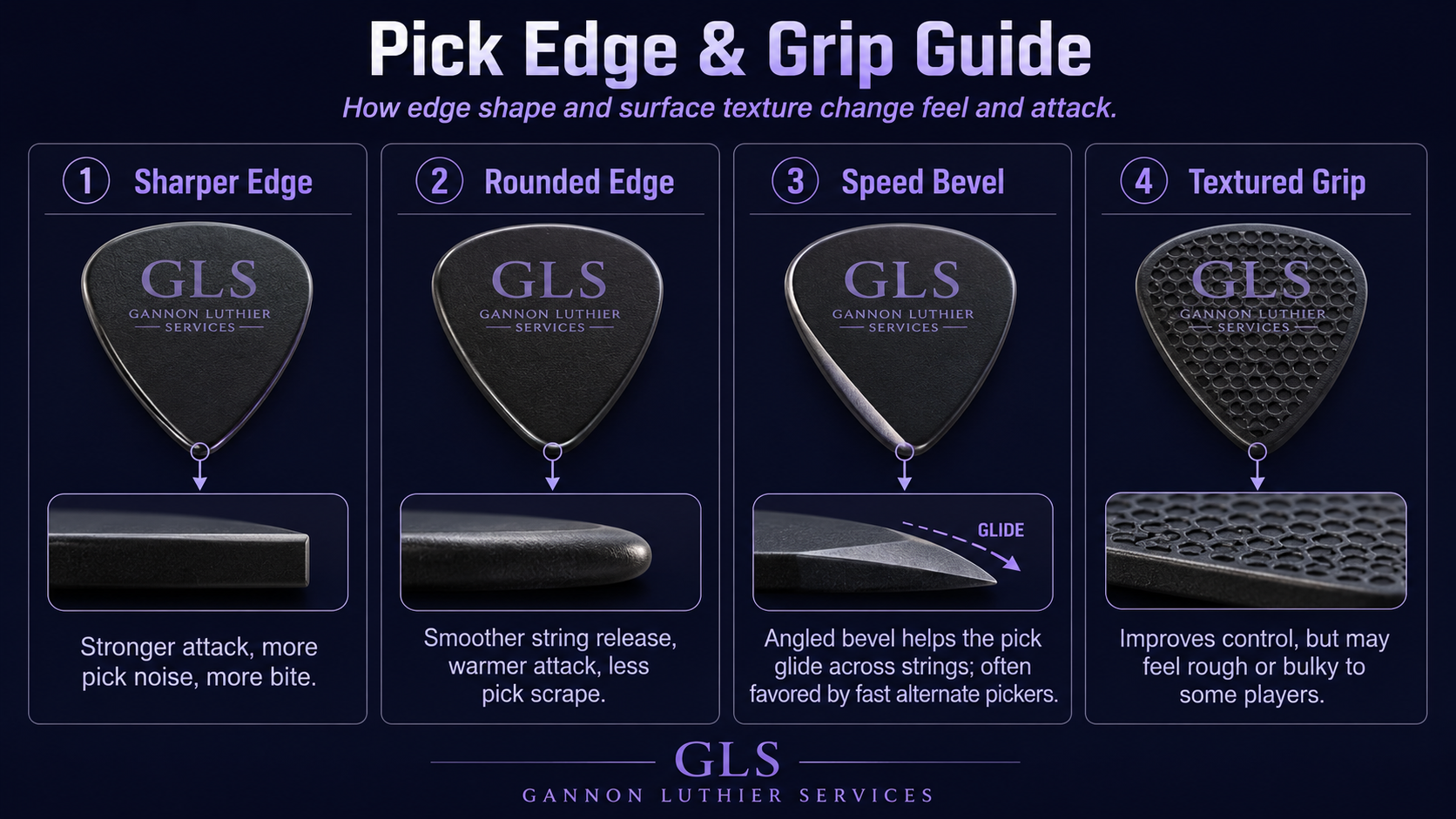
- Sharper edge: stronger attack, more pick noise, more bite.
- Rounded edge: smoother string release, warmer attack, less pick scrape.
- Speed bevel: angled wear-like bevel that helps the pick glide across strings, often preferred by fast alternate pickers.
- Textured grip: helps control but may feel rough or bulky to some players.
Pick Choice by Instrument
| Instrument / Use | Good Starting Point | Reason |
|---|---|---|
| Acoustic strumming | Thin to medium, ~0.50–0.73 mm | Smoother strum, less resistance, bright and even response. |
| Acoustic flatpicking | Medium to heavy, ~0.73–1.20 mm | Better note definition, stronger attack, more control. |
| Electric rhythm | Medium to heavy, ~0.73–1.00 mm | Balanced attack and control for chords and riffs. |
| Electric lead | Heavy to extra heavy, ~0.88–1.50 mm | Less flex, better accuracy, stronger single-note articulation. |
| Jazz guitar | Heavy small-shape pick, often 1.00 mm+ | Warm attack, control, fast release, and compact hand movement. |
| Bass guitar with pick | Heavy to extra heavy, ~1.00 mm+ | Thicker strings need a stiffer pick for control and definition. |
| Mandolin | Medium-heavy to extra heavy | Mandolin courses benefit from a firm pick and clean release. |
These are starting points, not rules. A light-touch electric player may use a thin pick very effectively, and a hard-strumming acoustic player may prefer a heavier pick to keep the attack controlled.
How Pick Angle and Grip Change Everything
Many players change picks when the real issue is technique. The pick should not be locked in a death grip. A tense grip can create harsh attack, pick chirp, hand fatigue, and uneven rhythm.
- Flat attack: more direct, louder, and sometimes more aggressive.
- Slight angle: smoother release across the string and less resistance.
- Too much angle: can create scraping noise and inconsistent tone.
- Loose but controlled grip: improves dynamics and reduces fatigue.
- Too much exposed pick: can feel sloppy and catch on strings.
- Too little exposed pick: can feel choked or limit strumming movement.
What Famous Players Use: Better as Inspiration Than Rules
The previous version of this blog placed a long “what the icons use” list in the sidebar. That approach can be interesting, but it is not the best primary sidebar content because artist pick choices change, signature products change, and many players use different picks in different eras, tours, recordings, or techniques.
A better approach is to treat famous-player picks as inspiration, not prescription. The player’s hands, technique, guitar, strings, amplifier, and recording context matter more than copying a famous guitarist’s pick exactly.
Use the companion carousel as a comparison tool rather than a rulebook.
GLS Recommendation: Keep the carousel as a separate companion page. Do not crowd the main blog sidebar with a long artist list. The sidebar should guide readers to related blogs and services.
Common Pick Myths
- Myth: Thin picks are always for beginners. False. Many experienced acoustic players use thin or medium picks for sound and feel.
- Myth: Heavy picks are always better for tone. False. Heavy picks provide control, but they can sound too stiff or aggressive for some music.
- Myth: The material alone determines tone. False. Thickness, shape, bevel, and player technique also matter.
- Myth: Copying a famous player’s pick gives you their sound. False. It may help with feel, but tone comes from the full system: hands, guitar, strings, pickups, amp, effects, and recording context.
- Myth: Metal picks are automatically better because they last longer. False. They are durable but can be harsh, noisy, and harder on strings.
Practical Pick Testing Method
The best pick is the one that works with your guitar and hands. Use a simple test instead of guessing.
- Pick one familiar riff, one chord progression, and one single-note line.
- Test three thicknesses: thin/medium/heavy.
- Use the same guitar, same amp setting, and same playing volume.
- Listen for attack, pick noise, note clarity, strumming smoothness, and hand fatigue.
- Record a short phone video or audio clip if possible. Picks often sound different to the listener than they feel to the player.
- Choose the pick that gives the best balance of tone, control, and comfort.
GLS Note: A pick that sounds great for acoustic strumming may not be the best pick for electric lead. Many working players keep multiple picks for different jobs.
GLS Final Take
Picks are not magic, but they matter. A pick changes the first point of contact between your hand and the string. That affects attack, feel, timing, dynamics, and how much control the player has over the note.
For most players, a small set of picks is better than one “perfect” pick. Start with a medium pick, a thinner acoustic strumming pick, a heavier lead pick, and one different shape such as a Jazz-style or large triangle pick. Then listen and feel honestly.
Gannon Luthier Services can help players evaluate setup, string gauge, action, pick attack, pickup height, and playability so the instrument responds properly to the player’s hands.
Gannon Luthier Services provides setup, inspection, and guitar service in Camarillo, Ventura County, Oxnard, Ventura, Thousand Oaks, and surrounding Southern California areas.
Frequently Asked Questions
What pick thickness should I start with?
A medium pick around 0.60–0.80 mm is a safe starting point for many players. Acoustic strummers may prefer thinner picks, while electric lead players may prefer heavier picks.
Do picks really change tone?
Yes, but not in isolation. Picks affect attack, brightness, pick noise, note release, and control. The final tone still depends on the player, guitar, strings, pickups, amp, and setup.
Are Jazz III-style picks only for jazz?
No. Small sharp picks are common in jazz, rock, metal, fusion, and technical lead playing because they give precise attack and require less pick travel.
Are expensive boutique picks worth it?
Sometimes. Boutique picks can offer excellent bevels, grip, and consistency. However, many players can get excellent results from standard picks if the shape and thickness are right.
Should bass players use a guitar pick?
Bass players can use a pick when they want a sharper attack, tighter rhythm definition, or a specific rock, punk, metal, or studio sound. It is a musical choice, not a right-or-wrong issue.